Landscape6 min read
Artificial turf vs. real grass sod: which lawn makes sense in California?
Compare artificial turf and real grass sod on cost, maintenance, durability and California climate so you can pick the right lawn for your yard.
What's actually the difference?
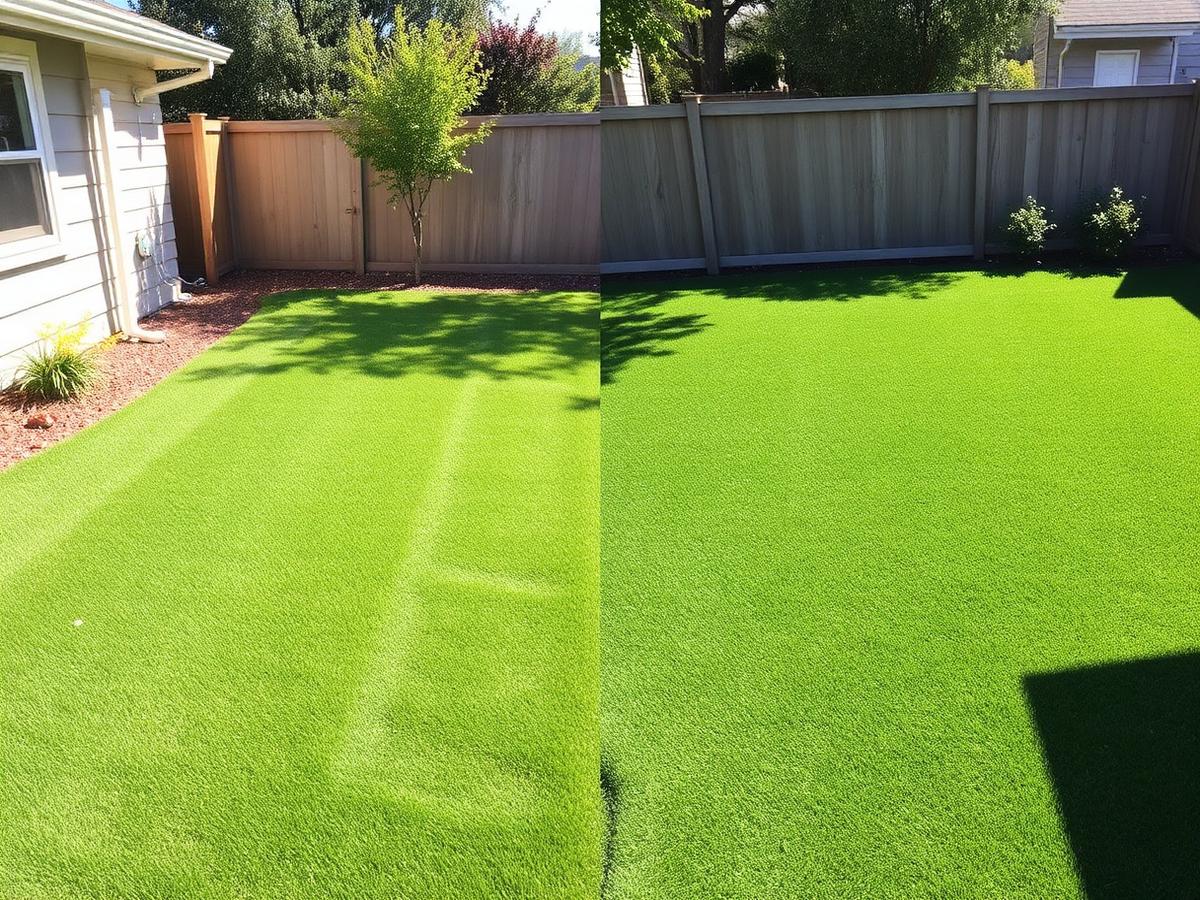
- Artificial turf — synthetic fibers over a compacted base and drainage layer. Green year-round, almost no upkeep.
- Real grass sod — natural grass grown on a farm and installed in rolls with roots and soil. It grows, cools the yard and repairs itself.
Maintenance
- Sod: watering, mowing, fertilizing, aerating and pest control.
- Turf: occasional rinsing and brushing, plus keeping debris off it.
Cost over time
- Sod: roughly $0.30–$0.85 per sq. ft. installed, but ongoing water and lawn-care costs.
- Turf: roughly $5–$20 per sq. ft. installed, then very little ongoing cost.
- Over 10–15 years, turf often ends up cheaper on inland lots where irrigation runs hard all summer.
Durability and traffic
- Sod wears in high-traffic lanes and around play structures, but regrows.
- Turf handles heavy traffic, dogs and shade where grass never fills in.
Environment
- Sod supports pollinators, cools the yard and improves soil.
- Turf saves water but is a plastic product with no biodiversity value and eventual replacement waste.
Which one for the East Bay?
Coastal and shaded lots with mild summers can sustain sod. Inland Contra Costa yards with hot, dry summers and drought restrictions are where turf usually wins — or a hybrid: a small real-grass area near the patio and turf or low-water planting everywhere else.
Frequently asked questions
- Does artificial turf get too hot in the summer?
- It runs hotter than grass in direct sun. We spec cooler infills and place shade structures or trees over play and seating areas to keep it comfortable.
- How long does artificial turf last?
- Quality turf on a properly built base typically lasts 15–20 years in residential use.