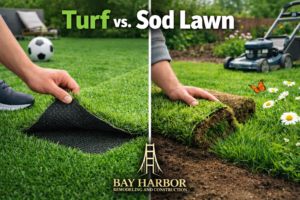
Creating the perfect lawn is one of the most important decisions for homeowners. A lush, green yard adds curb appeal, provides a space for family activities, and enhances property value. But when it comes to choosing between artificial turf and real grass sod, the debate can be overwhelming. This guide explores every angle—cost, maintenance, durability, environmental impact, and climate suitability—so you can make the best choice for your home.
What’s the difference between turf and sod?
- Artificial turf: A synthetic surface made of plastic fibers designed to look like grass. It stays green year‑round, requires minimal upkeep, and is often used in sports fields, playgrounds, and modern residential landscapes.
- Real grass sod: Natural grass grown on farms, harvested with roots and soil, and installed in rolls or squares. It’s a living ecosystem that grows, breathes, and repairs itself.
Which option looks more natural?
- Sod: Offers authentic beauty, seasonal variation, and a cooling effect underfoot. It feels soft, smells fresh, and enhances biodiversity.
- Turf: Provides consistent greenery regardless of weather. High‑quality turf can look convincing, but up close it often lacks the texture and variation of real grass.
How much maintenance is required?
- Sod: Needs watering, mowing, fertilizing, aerating, and pest control. It requires time, tools, and knowledge to stay healthy.
- Turf: Requires only occasional cleaning and brushing. No watering, mowing, or fertilizing is needed, making it ideal for busy homeowners.
What about cost?
- Sod: Lower upfront installation cost ($0.30–$0.85 per sq. ft.), but higher long‑term expenses due to maintenance, water bills, and lawn care services.
- Turf: Higher upfront installation cost ($5–$20 per sq. ft.), but minimal ongoing expenses. Over 10–15 years, turf can save thousands in maintenance costs.
Which is more durable?
- Sod: Can wear down in high‑traffic areas, especially during droughts or heavy rains. However, it can self‑repair through natural growth.
- Turf: Extremely durable, resistant to weather, and ideal for playgrounds, sports fields, and areas where grass struggles to survive.
How does each option impact the environment?
- Sod: Supports ecosystems, absorbs carbon dioxide, produces oxygen, and cools surroundings. It provides food for pollinators and improves soil health.
- Turf: Conserves water but is made of plastic, doesn’t support biodiversity, and contributes to landfill waste when replaced.
Which is better for California’s climate?
- Sod: Thrives in coastal regions with mild weather but struggles in inland areas with hot, dry summers unless irrigated. Drought restrictions often make sod lawns difficult to sustain.
- Turf: Performs well across California’s diverse climates, staying green without irrigation. It’s particularly useful in Southern California, where water conservation is a priority.
Final Takeaway
- Choose real grass sod if you value natural beauty, environmental benefits, and enjoy lawn care.
- Opt for artificial turf if you want convenience, durability, and year‑round greenery with minimal effort.
Conclusion
The decision between turf and sod ultimately depends on your lifestyle, budget, and environmental values. California homeowners face unique challenges with water restrictions and climate extremes. Busy families or rental properties may benefit from turf’s low maintenance, while garden enthusiasts will appreciate the living beauty of sod. By weighing the pros and cons, you can create a lawn that not only looks great but also fits your long‑term goals in California’s climate.